
Your shopping cart is empty!
Colanut

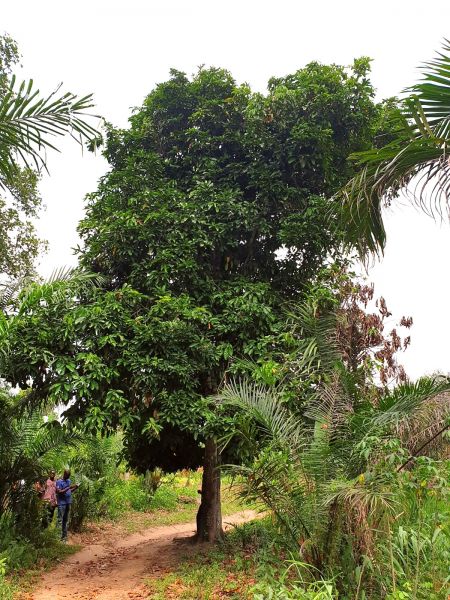
The Kola Nut — a tree native to the tropical rainforests of West and Central Africa — reaches a height of up to 20 metres. Synonymous names for this energy-giving plant include Kola tree, Cola acuminata, Cola nitida, Abate Kola, Abe, Afata, Ajauro and Aloko.
The plant is now also widespread in South America and South-East Asia and belongs botanically to the Sterculiaceae family. As a tropical species that knows no change of seasons, the kola nut bears fruit all year round. While numerous varieties of the plant exist, Cola nitida (the large kola tree) and Cola acuminata (the small kola tree) are among the best known and most established representatives. Cola nitida is primarily dried and used for export; Cola acuminata is used fresh by locals as a chewing substance.
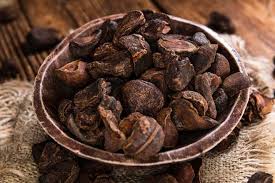
With its stimulating and psychoactive properties, the fruit of the kola tree is woven intricately into the mythology of its country of origin. The aphrodisiac nut originally served as food for the gods, forbidden to humans. Only when a small piece of the rare delicacy was forgotten on earth did trees grow, according to legend, allowing it to be discovered by humankind.
The invigorating and aphrodisiac power of the plant was harnessed in magical contexts in the form of charms and amulets. Over time, however, this prized substance evolved into a socially integrative one. The kola nut is offered to guests as a gesture of respect, serves as a tingling, desire-enhancing gift between lovers, and business deals and contracts are sealed through the exchange and shared consumption of the nut.
The kola nut occupies a role in West Africa similar to that of alcohol in the Western world — a socially established recreational substance and all-rounder. The nuts are also offered to ancestors as a sacrificial gift and consumed in convivial company at religious or socially significant events. For some African tribes, they are said to have even served as a means of payment.
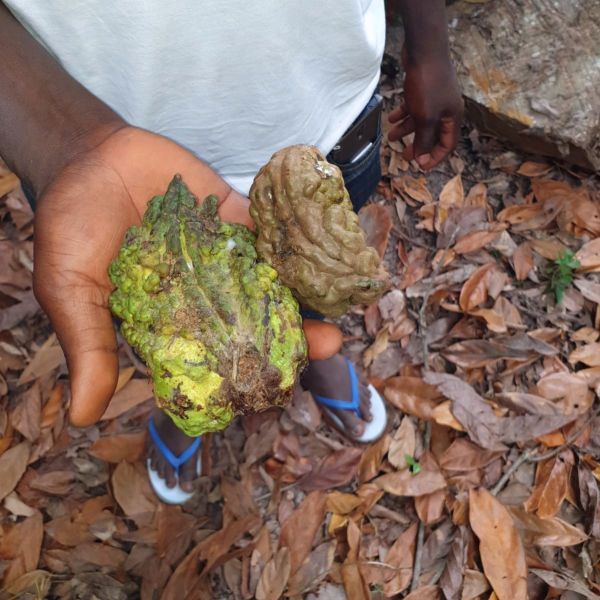
On our continent, the invigorating nut did not become known until the 16th century, after which the first plantations were established in India in 1680. This enabled trade in extracts derived from the nuts. From one such extract, combined with coca leaves (from which cocaine is obtained), the first cola was created — at the time still a strongly psychotropic drink.
For those tempted to try it by these compelling aspects, please note the following:
It is first important to free the seeds from their shell and remove the white, delicate seed coat. This can be done in various ways: soaking in water causes the seed coat to swell and allows it to be peeled away — the ideal method if you wish to chew the nuts fresh. If the nuts are dried in the sun, the seed coat gradually decomposes and need only be washed off afterwards.
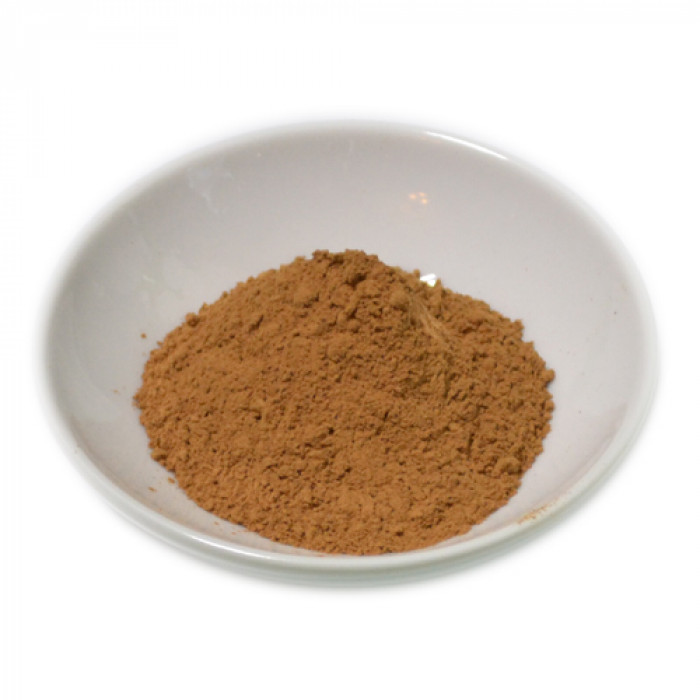
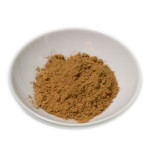
For connoisseurs: kola nuts taste bitter and aromatically earthy. They are quite hard, and chewing on them — given their consistency — is not to everyone's taste. Fresh nuts should be consumed quickly as they do not keep well, which is why they are most commonly dried and ground into powder.
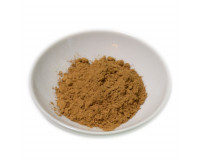
Tea: Those who enjoy a sharp, bitter flavour can prepare a drink from the powder. Two to four grams is considered a generally well-tolerated dose. Anyone who stirs kola nut powder into a coffee should be prepared to experience considerable restlessness and, in the worst case, tremors and elevated blood pressure. The kola nut is already so stimulating that additional energisers should not be necessary. An acquired taste but equally potent is mixing the powder with fruit juice, milkshakes or cacao.
According to the literature, this potent stimulant contains up to three and a half percent caffeine and up to one percent theobromine, depending on the variety. Unlike coffee, which is roasted before consumption and therefore contains a high amount of readily available caffeine, the caffeine in kola nuts remains in its natural bond with various tannins. In this way, the caffeine is metabolised more slowly and acts less intensely — but consistently and with long-lasting effect.
The kola nut proves generally to be enlivening, stimulating, mood-lifting and conducive to communication.
Whether as a cola, milkshake, cacao or freshly chewed pure preparation, the kola nut is a natural stimulant that promotes concentration, keeps you alert and curbs excessive appetite. As already mentioned, dosage experiments should not be taken too far. For those who approach the caffeine content with mindfulness, however, a wonderfully invigorating effect awaits!
Traditional Use: Beverage (1-2TL) / vaporize (185-200C)
Write a review
Your Name:Your Review: Note: HTML is not translated!
Rating: Bad Good
Enter the code in the box below:
Related Products
Featured