
Your shopping cart is empty!
Kanna HCL
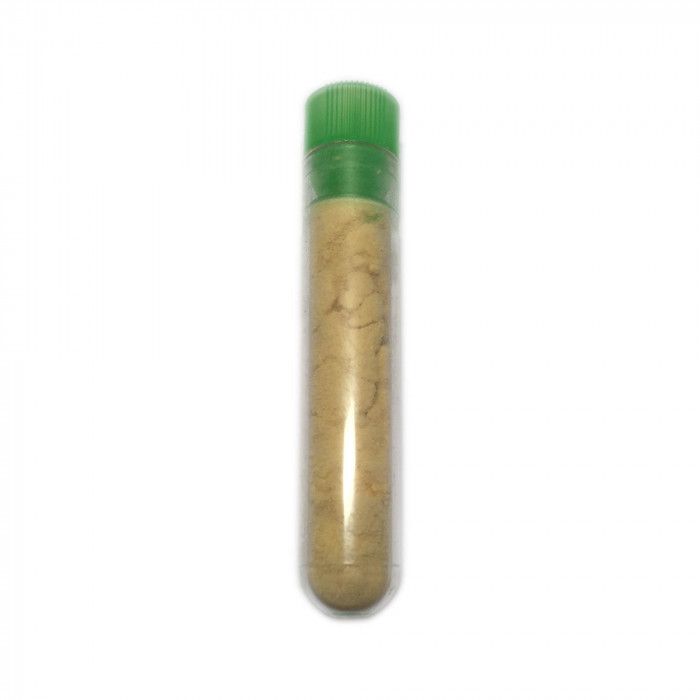
Weight: 1 g -
Price:
17.90€
2 packs or more cost only 17.00€ per pack
5 packs or more cost only 16.00€ per pack
10 packs or more cost only 15.00€ per pack
5 packs or more cost only 16.00€ per pack
10 packs or more cost only 15.00€ per pack
Qty:
- OR - Add to Wish List
Add to Compare
- OR - Add to Wish List
Add to Compare

Sceletium tortuosum HCL 6% – TOTAL PLANT ALKALOID EXTRACT!!! (MZ0)
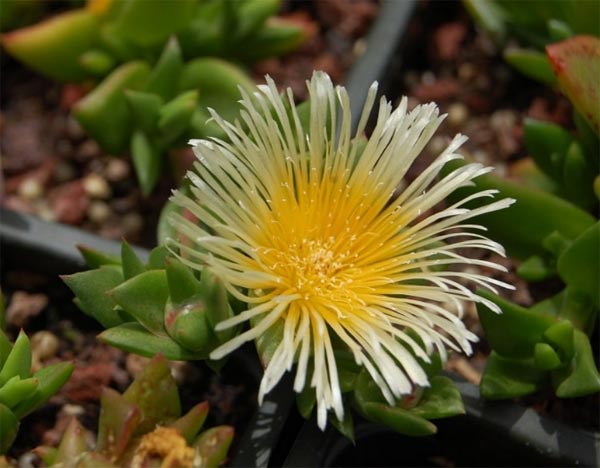
Kanna, also known as Sceletium tortuosum, is the most widespread plant species of the Aizoaceae family. Thanks to its remarkable capacity for water storage, it is also a member of the succulent group. During its flowering period, which runs from July to September, it produces white to pale yellow, salmon or pink petals with pointed tips. The creeping, and rarely climbing, plant bears small fruits during its flowering season — capsule fruits that enclose the seeds in chambers. Kanna thrives in South Africa from Namaqualand through to Montagu and Aberdeen.
The Khoikhoi used the above-ground parts of the plant in fermented and dried form for snuffing, chewing or in smoking blends. When the Dutch occupied South Africa, they soon came into contact with the Khoikhoi and, in their characteristic colonial arrogance, began assigning new names to both people and plants. The Khoikhoi were renamed "Hottentots" and Kanna became "Kougoed" — a term almost synonymous with "chewing stuff", referring to something that unfolds its effect when chewed, exactly as the Khoikhoi had long practiced traditionally. The term "Khoikhoi" is itself a collective name for culturally and linguistically related peoples of South Africa and Namibia.
The Khoikhoi are said to have named Kanna after an antelope sacred to them, which also bore the name Kanna and was hunted in a ritual context. To cover long distances on foot in intense heat, rising feelings of hunger and thirst had to be kept under control — and for this purpose, Kanna was employed. The leaves were first fermented and then chewed along the way. The plant was also used to lift the spirits during such gruelling undertakings. In combat situations, Kanna is said to have produced anxiety- and stress-suppressing effects. Celebrations of victory and ceremonies marking the return of hunters and warriors were enriched by the plant's relaxing, euphoric and dream-like qualities. Kanna was also mixed with cannabis and smoked, which was said to amplify the effects of the cannabis.
In African tradition, Kanna is a well-regarded remedy for stomach pain, for calming children, and for alleviating anxiety and depressive moods. In small amounts it is described as having a calming effect; in higher doses it induces euphoria. The plant, which to this day enjoys great esteem as a medicinal herb, is no longer particularly common in its natural form. Rare and sought-after, it can however be propagated from seeds, which are to be treated in the same way as cactus seeds.
The main alkaloids of the Kanna plant are mesembrine, mesembrenine and tortuosamine. Mesembrine is said to act as both a sedative and a stimulant by blocking serotonin transporters, causing the active compound to remain available in the body for longer. Initial reports describe an invigorated, sense-sharpening and tonic state, before a transition into a relaxed condition sets in. Various trip reports online comparing the effects of Kanna to those of MDMA align with the historical and geographically distant experiences of indigenous peoples.
In our part of the world, the dried and powdered plant is the common form used. Dosages vary depending on the desired state, and extracts are also available. Smaller doses can be used without concern in everyday life for a calming effect. While the pleasant state can be beneficial, it may tip into the opposite if combined with certain substances intended to enhance psychological wellbeing — as these amplify Kanna's effects considerably. Such combinations are therefore strongly discouraged. The substances to be approached with caution include psychotropic medications as well as ethnobotanical treasures such as Syrian rue, yohimbe and ayahuasca vine. Dangerous consequences of such combinations can include restlessness, muscle twitching, heavy sweating, chills and trembling limbs. Neuromotor and cognitive disturbances have also been observed. A less alarming but nonetheless unpleasant combination — mainly hard on the stomach — is cannabis or alcohol. Those particularly attached to the contents of their stomach may wish to avoid this. For the outlaws among us, however, it should be noted that the Khoikhoi did and do smoke both plants together.
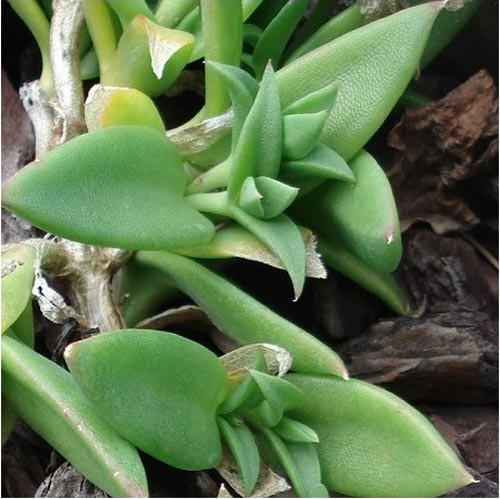
Let us now take a closer look at the individual methods of use:
Chewed: Half a teaspoon of Kanna powder is recommended. To make the powder easier to chew, a pre-chewed piece of gum can be pressed into the powder. Chew the dusty gum until it becomes sticky again, then repeat the process until the half teaspoon is used up. Effects set in after approximately half an hour and, at this dose and with this method, tend to be calming, anxiety-relieving and mood-lifting. The dose can be increased to up to two grams, which brings the euphoric qualities more prominently to the fore.
Smoked: For those who prefer to smoke, combine the same half teaspoon with suitable smokable plant material. The powder can, for example, be rolled into a cigarette by sprinkling it over tobacco or another plant that smokes well, such as marshmallow leaf. Effects set in somewhat more quickly this way. Note: these powders can be difficult to smoke. Pay attention to the mixing ratio — it may be advisable to split the half teaspoon across two or three cigarettes.
As a tea: For more conventionally minded users, the tea form is an alternative in which up to two grams of Kanna powder are mixed with water. Pour hot water over the desired amount of powder, leave to steep for a few minutes, then drink including the powder. The effects unfold in the same way as when chewed and likewise set in after approximately half an hour.
Snuffed: Those who prefer to snuff should use the plant extract sparingly — minimal amounts of the extract are appropriate here. A knife tip may already be sufficient. As different extracts vary in potency, it is advisable to approach cautiously. Even a very small dose can stimulate perspiration. Shortly afterwards, euphoria sets in and touch may be perceived more intensely. As the euphoric effect fades, it transitions into a deep relaxation. The extracts are well suited for everyday use.
Sceletium tortuosum is a selective serotonin reuptake inhibitor (SSRI) and must not be combined with monoamine oxidase inhibitors (MAO-I) such as Peganum harmala, Banisteriopsis caapi and yohimbe.
Burn / Vaporize on a fireproof plate.
Write a review
Your Name:Your Review: Note: HTML is not translated!
Rating: Bad Good
Enter the code in the box below:
Related Products

Featured