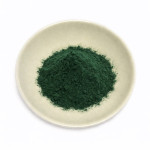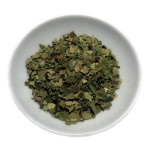

Your shopping cart is empty!
Blue Lotus


Nymphaea caerulea (10g)
The Blue Water Lily, also known as Nymphaea caerulea or Blue Lotus, is a water lily from the tropical regions of Africa that was already in use in ancient Egypt.
As a water lily, Nymphaea caerulea grows in still and gently flowing waters. It emerges from a rootstock (rhizome) lying beneath the water's surface and presents itself to the astonished observer with oval green leaves and delicate blue-violet flowers at the surface. The Blue Lotus can be found during its main flowering season from February to May, but also throughout the year. With the rising of the sun, the flowers open, closing again in the afternoon.
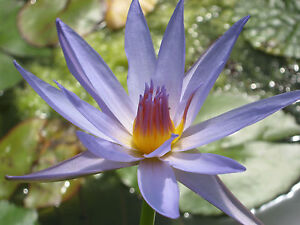
Consulting ancient Egyptian mythology, everything that exists arose from a primordial body of water. From this legendary primordial soup emerged Nefertem and the Blue Water Lily, making the two inseparable. Nefertem is known as the protective god of fragrances owing to his connection with this scented plant, but also holds dominion over ointments and anointing oils. He is recognisable by a characteristic lotus flower, which he wears as an adornment upon his head or carries as a sceptre. The ancient Egyptians saw in the lotus plant a symbol for the path of the sun across the firmament — opening each morning with the first rays of sunlight and closing again at sunset. This daily spectacle, and with it Nefertem, was associated with the cycle of creation and rebirth. According to legend, Nefertem was the one who brought the fragrance and beauty of the lotus to Ra, the sun god. It is above all his close interweaving with the light of the sun that makes Nefertem a fighter against darkness. As a warrior of light, he represents the bridge between day and night, death and birth. His task is to help the deceased ascend to the heavens and to the sun god. As the holder of — in mythological terms — actual sovereign authority over the court of the afterlife, he was also feared, for he could harm souls that could not plausibly justify their deeds and cast them into chains.
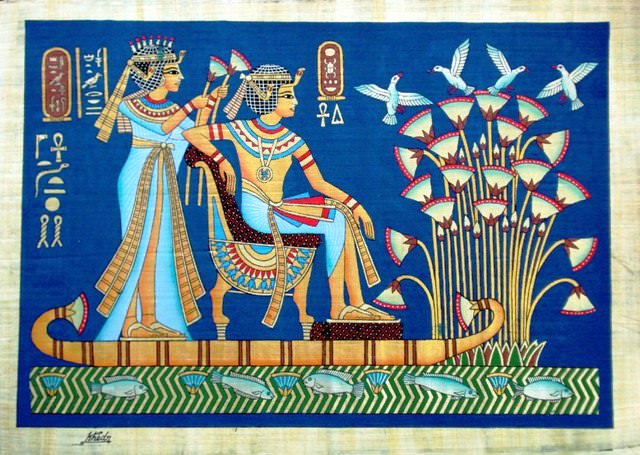
The Egyptian Book of the Dead, a liturgical compendium of magical spells, contains incantations intended to bring about transformation within the realm of the dead. In transformed form, the deceased are said to find it easier to navigate the afterlife. If the desired form is the Blue Lotus, the departed soul places great hope in being permitted to reincarnate. The Blue Lotus thus embodies rebirth, new beginnings, new life.
In addition to the use of magical spells, the dead were anointed and adorned with the blue blossoms of the water lily. Tomb decorations featuring Blue Lotus have also been found, depicting numerous images of the fascinating flower on drinking vessels alongside mandrake and opium poppy. A detective's instinct suggests that the ancient Egyptians were well acquainted with the psychoactive properties of the plant. Various wall paintings also indicate that the Blue Water Lily was served at festivities.
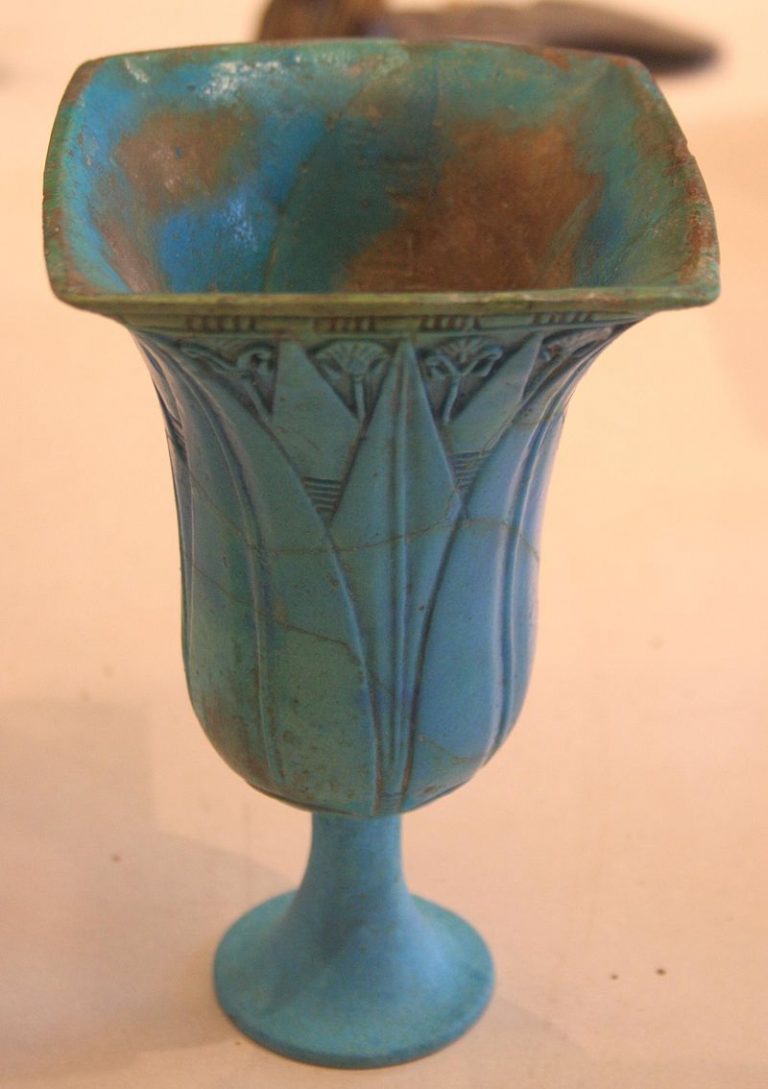
Nymphaea caerulea was first scientifically described in 1798 by Marie Jules César le Lorgne de Savigny, who accompanied one of Napoleon's Egyptian campaigns as a naturalist. More recently, the Blue Lotus has attracted public interest as a possible legal high in smoking blends.
The active compounds of the Egyptian water lily have remained as mysterious as its history. To this day, its constituents are not fully understood. It is however assumed that the aporphine alkaloids aporphine, apomorphine and nuciferine are present. These alkaloids are of particular interest for their pharmacological similarity to morphine, which can among other things be derived from them. Apomorphine users report a blood pressure-lowering effect. In addition, the dopamine-stimulating effect could prove beneficial in Parkinson's disease. Flavonoids are also present, which according to further anecdotal reports have been observed to be helpful with cardiovascular issues.
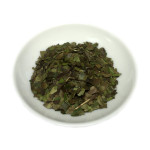
The flowers and buds of the plant are the parts used. As with unfamiliar substances in general, it is advisable to begin with a small amount to gauge the strength of the effect.
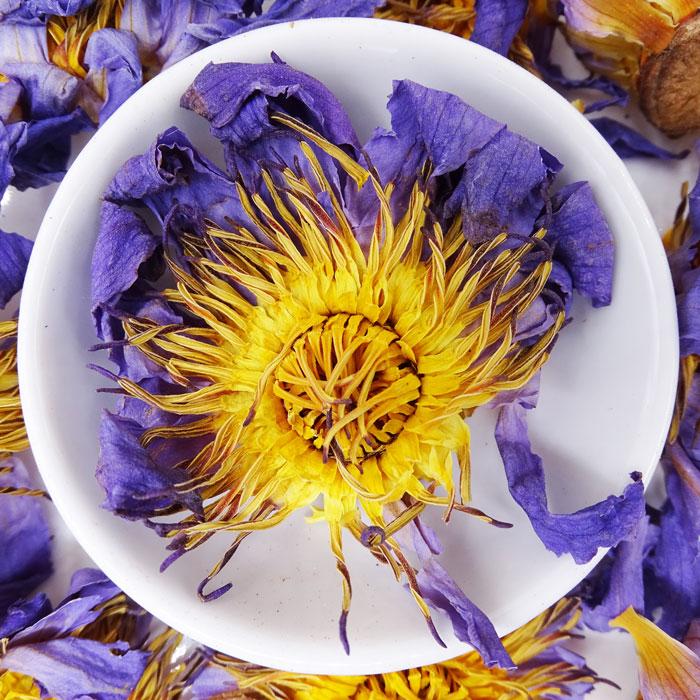
Tea: Take two to four teaspoons per cup and leave to steep for ten minutes. Prepared as a tea, Blue Lotus is gentle on the stomach, relaxing, mildly aphrodisiac and slightly hypnotic — making this form of preparation perfect for a cosy evening or as an aid to catching a glimpse of one's inner world. Meditative practices may also be enhanced.
Smoked: Fill a joint with the flowers and add a little tobacco if desired. The effect is comparable to that of the tea. Vaporising is of course also an option — feel entirely free to do so!
Red wine: For fans of magical potions, the red wine variant is recommended: steep six grams in a bottle of red wine overnight. Keep the vessel sealed while the flowers are infusing. The longer the Blue Lotus is left to its own devices in the wine, the more powerfully it distributes its effect. The resulting drink tastes sweet and pleasant, and acts more intensely than tea or smoke. The aphrodisiac effect in particular deserves mention. CEVs (closed-eye visuals) are also observed — patterns and images that rise from the depths when the eyes are physically closed.
Decoction: Cover the available plant material in a pot with cold or lukewarm water, approximately two finger-widths above the level of the flowers. Since the flowers float, it is advisable to determine the amount of water beforehand. Leave the mixture to soak for half an hour, then bring to the boil. Reduce the temperature after the initial heating, place a lid on the pot and leave the brew to simmer for a further 30 minutes. The liquid is then poured off and stored in a separate vessel. The used plant material is covered with water once more and the process is repeated. The two liquids are then combined and the mixture is ready to drink. Note: at the outset, isolated occurrences of nausea and muscle twitching have been observed, though these are soon replaced by alterations in perception. The hallucinogenic state should last for approximately two hours.
Macerate: For this method of preparation, cover the flowers with cold to lukewarm water and leave the mixture to rest overnight. The following day, the strained extract is ready to enjoy. The effect unfolds with similar intensity to the red wine extract, though less aphrodisiac in nature.
Traditional Use: Vaporize (150-190C), Tea ( 2-4 teaspoons )
Write a review
Your Name:Your Review: Note: HTML is not translated!
Rating: Bad Good
Enter the code in the box below:

Related Products
Featured