
Your shopping cart is empty!
Amanita Mushroom Caps (20g)
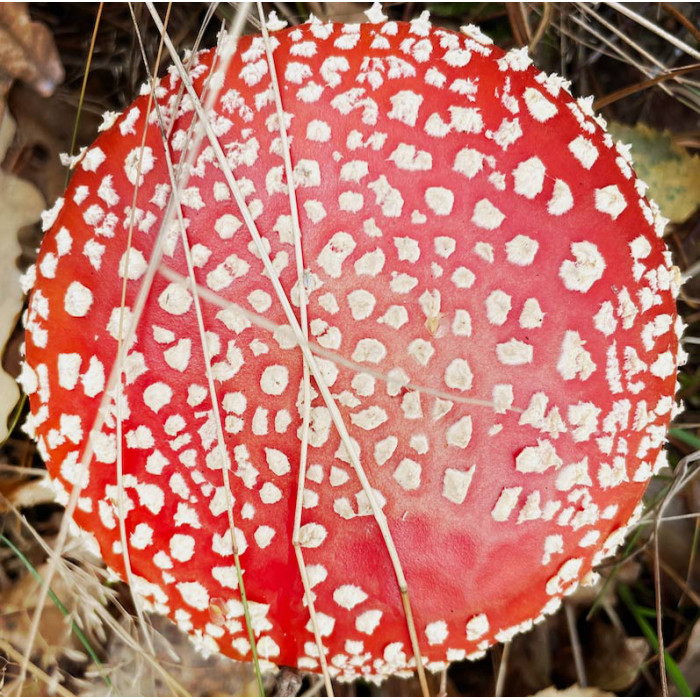

The Fly Agaric (Amanita muscaria) – A Red Sign Between the Worlds
Few mushrooms speak as clearly in colour as the fly agaric. Its vivid red, speckled with white dots, looks like a deliberate sign placed within the green silence of the forest. It stands there like a word from a fairy tale that one cannot overlook — mysterious, beautiful and slightly otherworldly.
In ethnology, the fly agaric appears not as a mere forest dweller but as a symbol. In Siberian, Nordic and shamanically influenced cultures, it was regarded as a threshold being — a companion between the everyday and the mythic, between the visible and the invisible. It appears in stories, rituals and symbolic worlds not as food, but as a sign, a mediator, a part of a greater cosmic order.
It also left its mark in European folk belief: as a bearer of good luck, a guardian of secret places, a quiet actor in winter fairy tales and forest legends. Its form found its way into paintings, embroideries and children's books — always carrying an undertone of the wonderful, never quite tamed.
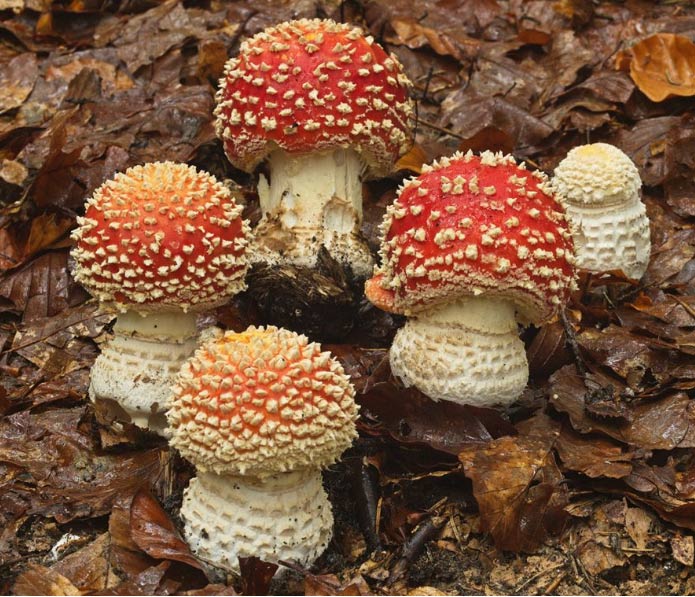
The fly agaric serves as a reminder that nature was not only used, but interpreted. That plants and mushrooms carried stories long before they were named or categorised. It stands for a time when the forest was not merely a space, but a storyteller.
And so the fly agaric remains a symbol to this day: of the enigmatic, of ancient knowledge, and of the poetic power of nature — which need not explain itself in order to have effect.
The fly agaric is considered inedible and toxic within Western value culture and is therefore not suitable for oral consumption. We recommend the safe application as incense.
Write a review
Your Name:Your Review: Note: HTML is not translated!
Rating: Bad Good
Enter the code in the box below:

Related Products
Featured